
Air Conditioning in the UK: Install, Maintain or Repair?
.png)
Air conditioning in the UK: install, maintain or repair? A straight-talking guide for busy facilities teams
Every June, inboxes fill with heatwave complaints and hot-desk drama. If you manage sites, you are likely weighing three choices: install new air conditioning, repair what has failed, or tune what you already have to ride out summer.
This guide gives you a practical way to decide. It covers UK building constraints, F-Gas obligations, lifecycle thinking, typical faults, what contractors actually do on site, realistic budget ranges, and how to line up pre-summer maintenance so you cut downtime when temperatures climb.
Use it as a decision aid, then act quickly. Lead times tighten in June, and a small amount of planned work now can avoid bigger reactive costs later.
When installing new AC makes sense
AC in the UK is no longer a luxury. Heatwaves are more frequent, internal gains from IT and lighting are higher, and many modern offices rely on sealed facades. Installation is typically worth it when:
• Comfort or process cooling issues are recurring and affect productivity or compliance.
• Equipment is at or beyond life expectancy, usually 10 to 15 years for split systems, Some VRF systems run 15–20+ years and major parts are obsolete.
• It is at or beyond life expectancy, usually 10 to 15 years for split and VRF systems, and major parts are obsolete. Repairs exceed a sensible break-even threshold, for example, a quoted repair over 40 percent of replacement cost on older plants.
• You need improved efficiency and better controls to manage energy costs and indoor air quality.
UK-specific constraints to check early include planning permission for external condensers, listed building restrictions, noise limits, and structural or electrical capacity. For sensitive sites, low-profile condensers, acoustic shrouds, and roof placement can help, but listed buildings may require conservation officer approval and sometimes steer you toward internal-only options like water-cooled condensers.
If you are rolling out across a portfolio, align specifications, warranties, and F-Gas logging from day one. Coordinating through integrated hard FM, simplifies vendor management and speeds approvals. If you want a partner for portfolio rollouts and long-term coverage, explore First in Service hard FM and facilities options to streamline delivery across sites.
Repair vs replace: a simple break-even logic
A practical rule of thumb blends age, efficiency, and risk:
• Under 7 years old and well maintained: repair is usually the best first move unless there is a critical design flaw.
• 8 to 12 years old: compare the repair cost with expected remaining life and energy savings from new kit. If a single repair exceeds 30 to 40 percent of like-for-like replacement, and failure risk is high, replacement often wins.
• 13 years plus or using obsolete refrigerants or controls: plan replacement. Continuing reactive spend typically outpaces the value gained.
Always factor downtime and access costs. Repeated callouts during a heatwave can exceed the cost of a planned upgrade.
What contractors actually do on site
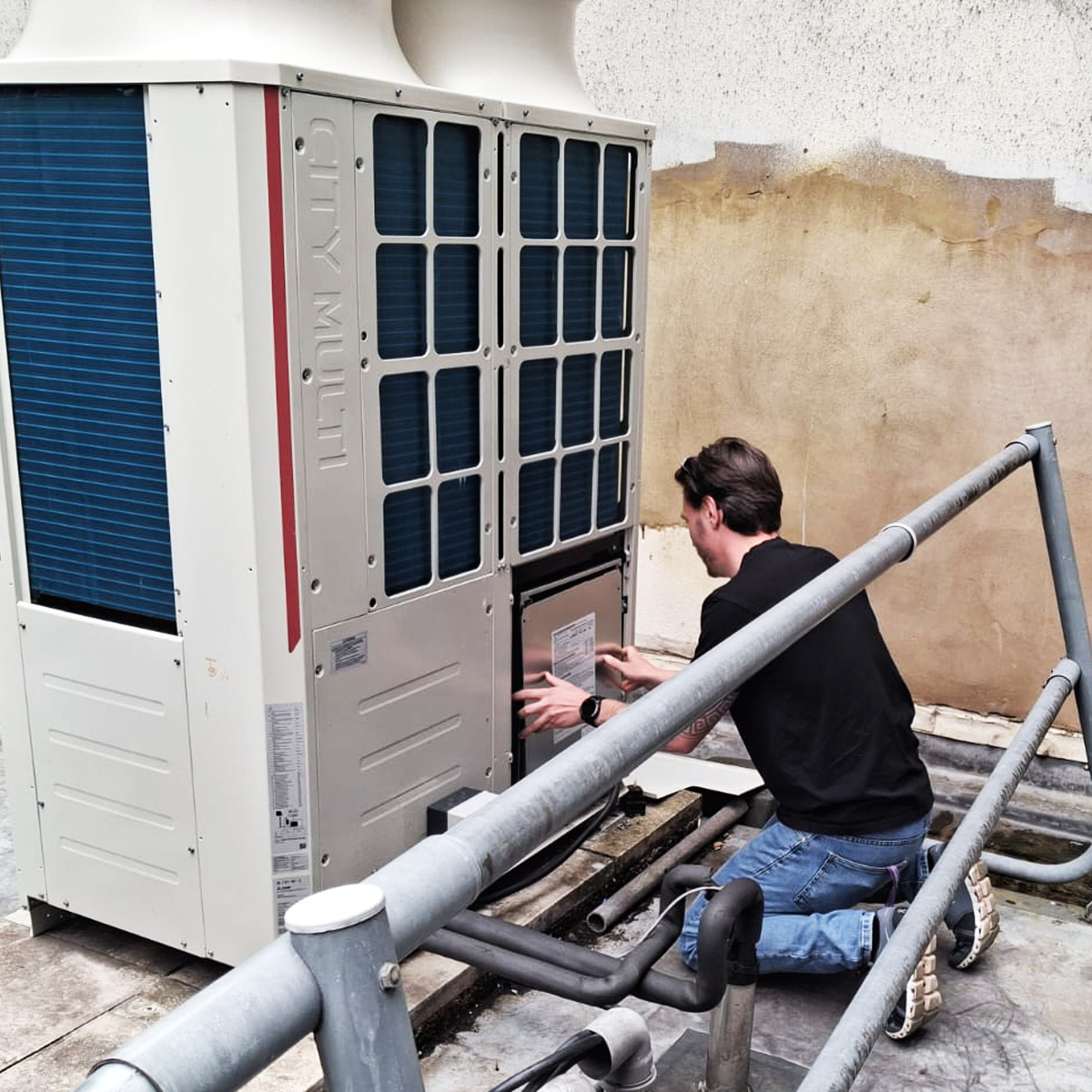
On a repair or service visit, an air conditioning contractorwill typically:
• Review asset history, F-Gas records, and errorcodes.
• Inspect filters, coils, condensate drains, fans, belts, terminals, and electrical protection.
• Check refrigerant pressures, super heat and sub-cool targets, and look for leaks using electronic detectors or nitrogen pressure testing.
• Test controls, sensors, and communications on VRF and BMS interfaces.
• Clean indoor and outdoor coils, clear drains, tighten terminals, and update logs.
• Quote parts with lead times, then return to commission and verify performance.
For installs, the team will survey loads, select equipment, plan pipe runs and power, fix brackets, pressure test, evacuate to recommended microns, charge by weight or commissioning data, leak check, commission controls, and hand over O & M manuals with F-Gas details.
If downtime is business critical, ask about 24/7 reactive cover and temporary cooling options. A rapid response model reduces revenue loss and keeps occupant confidence high.
The 3-minute rule explained
The 3-minute rule protects compressors from short cycling. After a compressor stops, controls enforce a minimum three-minute delay before it can restart. This allows system pressures to equalise, reduces in rush current stress, and protects windings and bearings. If your system repeatedly tries to start sooner, suspect control faults or power interruptions. Respect the delay during testing; forcing rapid restarts can damage the compressor.
Common AC faults you will see first
The most frequent problems reported to helpdesks are:
• Air flow issues caused by clogged filters or dirty coils, leading to poor cooling and high energy use.
• Refrigerant leaks that trigger low-pressure faults, icing, and loss of capacity.
• Condensate blockages that cause water leaks and ceiling damage.
• Sensor or control failures causing erratic cycling or rooms overshooting setpoint.
• Outdoor unit faults such as fan failures, contactor wear, or tripped breakers due to heat load and debris.
Most of these are preventable with seasonal servicing and good housekeeping.
Maintenance cadence that works in the UK
For typical commercial offices and retail, plan two services per year: pre-summer and pre-heating season for heat pumps. High-dust, kitchen-adjacent, or 24/7 sites may need quarterly checks. At a minimum, each visit should include filter replacement or cleaning, coil cleaning, drain clearing, electrical checks, refrigerant performance checks, and control verification. Keep F-Gas logs current where refrigerant charge meets UK thresholds.
If you are building your calendar, this guide to planned preventive maintenance is a useful reference for structuring tasks, frequencies, and records without over-servicing.
Budget ranges you can plan around
Exact costs depend on capacity, brand, access, electrical work, and finishes, but typical UK ranges are:
• Split system installation for a small office zone: often in the low thousands per system supplied and fitted, rising with pipe runs and fabric reinstatement.
• Multi-split or VRF projects: typically, several thousand to tens of thousands per zone depending on scale, controls, and building complexity.
• Reactive repairs: diagnostics are usually a modest callout, with parts like fans, PCB's, and expansion valves varying widely. Compressor replacements and major leaks can become significant projects once cranes and refrigerant are involved.
• Maintenance: bi-annual servicing is commonly priced per indoor and outdoor unit, with economies for volume and multi-site portfolios.
Use lifecycle costing rather than headline price alone. More efficient equipment can reduce running costs, especially when heat pumps off set winter heating.
Compliance you cannot ignore
UK facilities must keep F-Gas records for qualifying systems, ensure leak checks at the correct frequency, and use certified engineers for refrigerant handling. Where planning or listed building status applies, secure approvals before works. For multi-tenant sites, coordinate OOH working and permits to minimise disruption.
Integrating AC service with broader FM activity improves audit readiness. If your team prefers a single partner across HVAC, refrigeration, and wider building services, consider engaging a provider that can deliver both reactive and planned maintenance, plus documentation in one place.
Pre-summer checklist for facilities teams
Use this quick list to reduce breakdown risk whentemperatures climb:
• Confirm all indoor filters and outdoor coils areclean.
• Clear condensate trays and test pumps.
• Inspect outdoor units for debris and adequate air flow clearance.
• Verify set points, schedules, and dead bands in local controls and BMS.
• Check F-Gas logs and book statutory leak checks if due.
• Test a representative sample of rooms and log supply air temperatures and delta-T.
• Validate that critical spares and access equipment are available.
• Ensure 24/7 reactive arrangements and callout protocols are briefed to front-of-house teams.
For teams that also rely on refrigerated storage, bundle your pre-summer visit with refrigeration servicing so both AC and cold rooms are ready for peak load. You can book combined air conditioning and refrigeration support with First in Service to reduce site visits and paperwork.
How 24/7 reactive cover reduces downtime
Reactive cover with a clear escalation path prevents small issues from becoming closures. A dispatcher who understands your asset list, engineers with the right F-Gas tickets, and access to common spares are the practical differences between a one-visit fix and a multi-day outage. Add simple remote checks where possible so faults can be triaged before a van rolls.
If you operate multi-site or critical environments, look for a provider offering rapid response maintenance across HVAC and refrigeration, supported by planned visits to keep failure rates low.
FAQ
Is it worth installing AC in the UK?
Yes, in many buildings it now is. Heatwaves, sealed facades, internal heat gains, and productivity impacts mean AC often pays back through comfort, energy control, and reduced complaints. Check planning and listed building constraints early.
How much does it cost to get an aircon fitted?
Budgets vary with size, brand, and access. Small split installs are often in the low thousands per system. Larger multi-split or VRF projects scale to several thousand to tens of thousands per zone. Seek a site survey for a firm figure.
What is the 3-minute rule for air conditioners?
It is a built-in delay that prevents the compressor from restarting for at least three minutes after stopping. This protects the compressor from short cycling and pressure imbalance.
Is it worth repairing an air conditioner?
If the unit is younger than 7 years and generally sound, yes. For older units, compare the repair against replacement cost and remaining life. If a single repair exceeds roughly 30 to 40 percent of replacement and reliability is uncertain replacement often wins.
How often should air conditioning be maintained?
Typically, twice a year for commercial sites, with quarterly visits for high-load or dusty environments. Always keep F-Gas checks in line with charge thresholds.
What is a contractor on an AC unit?
An air conditioning contractor is the certified engineer or firm that surveys, installs, services, and repairs systems. On site they test, clean, diagnose faults, manage refrigerants, and maintain compliance records.
What is the most common problem with an air conditioner?
Air flow restrictions from dirty filters and coils are the most frequent issues, closely followed by refrigerant leaks and condensate blockages.
Next steps
If you are deciding between install, repair, or optimisation, start with a quick condition and compliance review, then book pre-summer servicing. Where replacement is likely, lock in surveys now to avoid peak-season lead times. For integrated support across AC, refrigeration, and broader FM, First in Service provides nationwide coverage with 24/7 response and compliance-led reporting.
By making a clear decision and scheduling the right level of support before the next heat spike, you protect comfort, control costs, and keep sites trading.
Share the article
.svg)
.svg)
.svg)
.svg)
.svg)
.svg)
.svg)