Commercial Catering Equipment Maintenance | Reduce Downtime
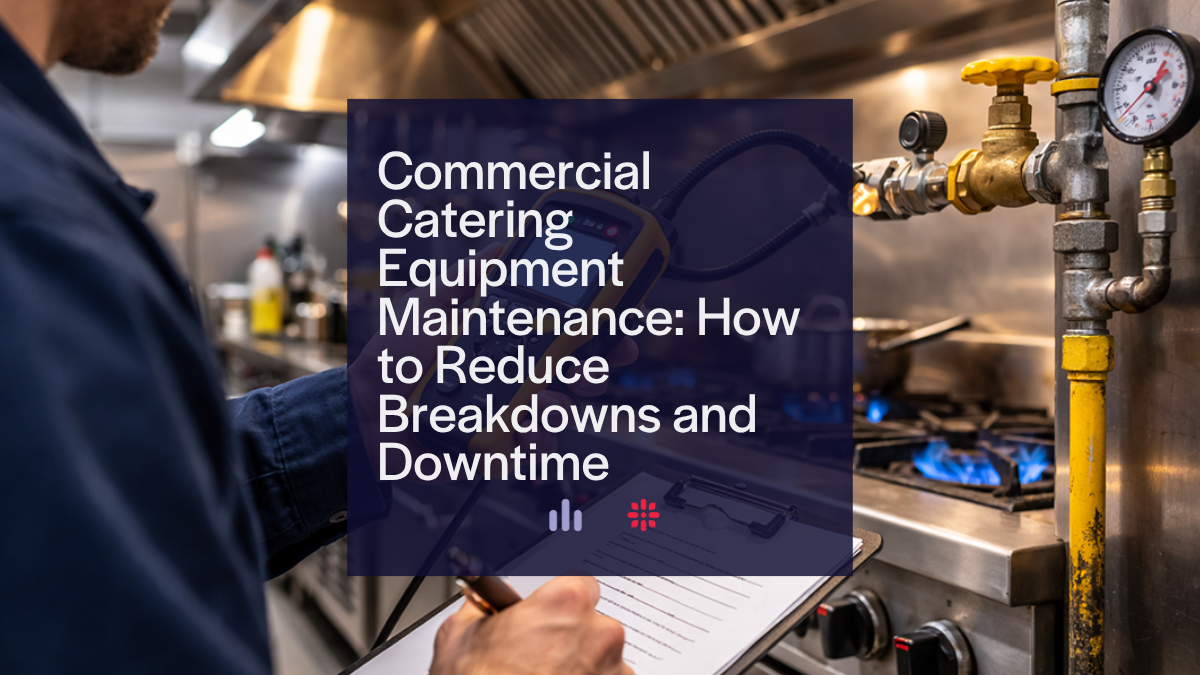
Commercial Catering Equipment Maintenance: How to Reduce Breakdowns and Downtime
In a busy commercial kitchen, a failed oven, fryer or dishwasher can quickly disrupt service. Food preparation slows, staff face additional pressure and unplanned repairs can stretch maintenance budgets. In some situations, a refrigeration fault can also put stored food at risk.
Commercial catering equipment maintenance helps operators spot developing faults earlier, plan essential servicing and make informed repair or replacement decisions. For restaurants, hotels, schools, care settings and multi-site hospitality businesses, the objective is simple: keep essential equipment available when it is needed most.
This guide looks at common problems, practical checks and how a planned preventative maintenance (PPM) approach can reduce avoidable downtime.
Why does commercial catering equipment maintenance matter?
Professional kitchen appliances work under demanding conditions, often for long periods. Heat, grease, limescale, repeated door opening and normal component wear can affect performance over time. Without appropriate checks and servicing, a small issue may develop into a larger failure.
- Reliability: identify deterioration before a critical appliance becomes unavailable.
- Cost control: plan repairs and replacements rather than relying solely on emergency call-outs.
- Food safety: support dependable temperature control, cooking and ware washing processes.
- Equipment life: reduce avoidable wear and keep appliances operating as intended.
- Operational visibility: use service records to spot recurring problems across one or many sites.
Common commercial catering equipment faults and how to reduce the risk
Different appliances have different vulnerabilities. The examples below are general warning signs and maintenance considerations, not instructions for unqualified staff to repair equipment.

If equipment repeatedly develops the same fault, ask the maintenance provider to investigate the underlying cause rather than simply replacing parts each time. Restricted ventilation, incorrect operating practices and water quality may all contribute, depending on the appliance.
Seven ways to reduce catering equipment breakdowns
1. Build a planned preventative maintenance schedule
Create an equipment register showing appliance type, location, model, age, service history and operational importance. Set inspection and servicing intervals using manufacturer instructions, condition, usage and relevant safety requirements. A heavily used primary cooker may warrant a different approach from a rarely used backup appliance.
2. Make daily checks part of the kitchen routine
Train staff to report leaks, unusual smells or sounds, visible damage, error messages and changes in operating performance. Refrigeration temperatures should be checked and recorded in line with the business’s food safety procedures. Take equipment out of use when a potential safety issue is identified, and escalate it appropriately.
3. Keep appliances clean and manage limescale
Grease, food debris and scale can interfere with performance. Follow the manufacturer’s cleaning and descaling instructions, use suitable products and maintain accessible filters. Staff should never open electrical or gas components or bypass protective devices during cleaning.
4. Watch for changes before a complete failure
A dishwasher that increasingly struggles to drain, an oven that takes longer to reach temperature or a fryer within consistent heating may be signalling a developing problem. Log the symptoms, frequency and effect on service, then arrange an inspection where needed.
5. Give kitchen teams clear operating instructions
Correct loading, start-up, shutdown and cleaning procedures help prevent avoidable damage. Make fault reporting straight forward and ensure staff know which appliances must not be used when a fault or safety warning appears.
6. Use suitably qualified engineers for servicing and repairs
Everyday checks are not a substitute for professional maintenance. Competent engineers can assess wear, performance and safety-critical components, recommend repairs and identify recurring issues. Gas work must be carried out by Gas Safe registered engineers qualified for the relevant work; electrical and refrigeration work also requires appropriate competence and, where applicable, certification.
7. Maintain useful, accessible repair records
Record service dates, faults, engineer findings, parts replaced and recommended follow-up work. These records help facilities managers identify repeat failures, compare costs and decide whether an appliance should be repaired or replaced.
Commercial catering equipment maintenance checklist
The checklist below is an illustrative starting point for site procedures. It does not replace appliance-specific instructions, risk assessments or legally applicable requirements.

How often should commercial catering equipment be serviced?
There is no single servicing interval for every commercial kitchen appliance. Requirements vary by equipment type, manufacturer instructions, hours of use, operating environment, condition and applicable safety obligations. Professional servicing should be planned around those factors, not a blanket assumption that every appliance needs the same annual visit.
A maintenance partner can help build an asset-level schedule, identify critical appliances and coordinate planned work around quieter periods wherever practical.
Commercial kitchen safety and compliance considerations in the UK
Maintenance also supports the safe operation of a professional kitchen. Relevant requirements may include the Gas Safety (Installation and Use) Regulations 1998 for gas installations and appliances, the Electricity at Work Regulations 1989 for electrical systems, and applicable food hygiene law relating to safe food handling and temperature control.
These rules do not create one universal servicing frequency for all catering equipment. Responsibilities depend on the appliance, premises and work involved. Operators should follow manufacturer guidance, keep appropriate records and use properly competent engineers for specialist tasks.

Why planned maintenance matters for multi-site operators
For facilities teams responsible for several restaurants, pubs, hotels or catering locations, the challenge is not just fixing individual appliances. It is keeping track of asset condition, coordinating visits and understanding where repeated failures are creating unnecessary cost or disruption.
A structured programme can help standardise equipment records, prioritise high-risk sites, schedule planned work and assess performance across an estate. Using a coordinated maintenance partner for catering equipment and related services can also simplify reporting and contractor management.
What happens when essential kitchen equipment fails?
A breakdown rarely affects only oneappliance. A dishwasher fault may reduce the availability of clean utensils; anoven failure can slow meal preparation; a refrigeration breakdown may requireprompt food-safety assessment and suitable alternative storage. The widerimpact can include missed service targets, stock losses, urgent repair costsand customer dissatisfaction.
Identify your business-critical equipmentand document who to contact, what temporary arrangements are safe and whatdecisions staff can make if an appliance fails during service.
When should catering equipment berepaired or replaced?
Repair may be the most cost-effective choice when a fault is isolated, parts are available and the appliance remains suitable for the kitchen. Replacement becomes more attractive where downtime is frequent, repairs are accumulating or an ageing unit no longer meets operational needs.
· Consider the appliance’s age, condition and maintenance history.
· Compare repair cost with likely remaining service life and replacement cost.
· Factor in spare-part availability, energy use and disruption to service.
· Ask an engineer to assess whether repeated faults point to a wider issue.
What our engineers see on site
These below are some of the most common faults our engineers find on sites:
· Water boilers: Limescale build-up, restricted water flow through filters, leaking probes, and issues with filling. These can affect performance and eventually leave the site without a working boiler.
· Combi ovens: Blocked drains, leaking hoses, worn door seals and recurring thermostat faults. Some of these issues can develop over time and may be identified through appropriate inspection and servicing.
- Dishwashers: Blocked filters or wash arms, drainage issues, scale build-up, and water treatment problems, all of which can affect cleaning performance.
When out on a job, our engineers check appliances for the condition of their components, any leaks or restrictions, its operating performance and any relevant safety devices. Making sure to record any remedial work required too, as it can be just as important as finding faults.
How First In Service Ltd can help
First In Service Ltd supports commercial kitchens with planned catering equipment servicing, reactive repairs and equipment replacement support. Our 24/7 helpdesk and engineering coverage can assist businesses managing single premises or multiple sites.
We can also support related requirements through our commercial refrigeration, gas and plumbing, and ventilation services, helping facilities teams coordinate maintenance through one provider.
Looking for a commercial catering equipment maintenance partner?
Contact First In Service Ltd to discuss a planned maintenance programme, an equipment issue or support across your estate.
FAQ'S
What does commercial catering equipment servicing include?
The scope depends on the appliance, but may include inspections, performance checks, assessment of wear and safety-related components, and recommendations for repairs. Engineers should follow relevant manufacturer instructions and applicable requirements.
How often should commercial gas catering equipment be serviced?
The suitable frequency depends on manufacturer instructions, use, condition and applicable duties. Gas-related work must be undertaken by a Gas Safe registered engineer qualified for the relevant appliance and work. Seek appliance-specific advice rather than applying one interval to every kitchen.
What are the most common causes of commercial kitchen equipment breakdowns?
Common contributing factors can include wear, grease or limescale build-up, restricted ventilation, unsuitable operating practices and neglected developing faults. The precise cause requires assessment of the appliance.
Can one provider maintain catering equipment across several sites?
Yes. A coordinated maintenance programme can centralise asset records, planned visits, fault reporting and repair history, helping multi-site teams monitor reliability and expenditure.
Is it better to repair or replace an ageing appliance?
There is no universal answer. Compare repair history, condition, spare-part availability, running costs and the operational impact of further downtime, ideally with advice from a competent engineer.
Share the article